Living in Lexington, MA: A Relocation & Logistics Handbook for Young Families
Explore Lexington’s historic village vibe: 30–45 min to Boston, 15 min to Alewife, 1–2 miles to schools, and exceptionally low crime rates.
Written ByKelly Kovacs
PublishedMarch 5, 2026
UpdatedApril 14, 2026
Buy or sell in Cambridge and Greater Boston with Kelly Kovacs. Local market expertise across Newton, Brookline, Somerville, Lexington & Wellesley. Serving Cambridge, Newton, Brookline, Lexington, Wellesley and Somerville, MA.
Lexington, MA
Region
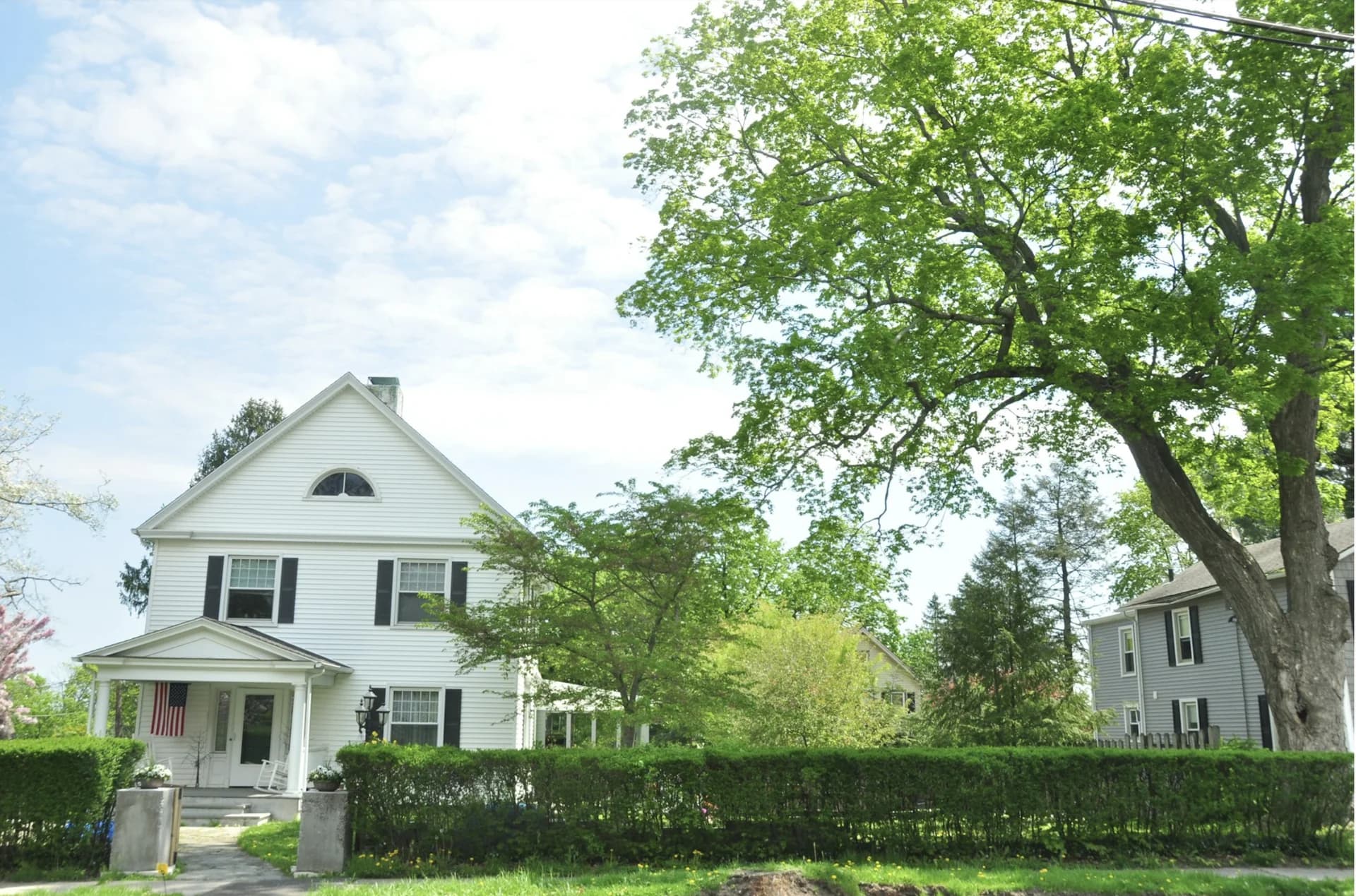
While Cambridge and Greater Boston have their undeniable pull, Lexington is particularly well-regarded among academically-minded families for offering something altogether different - a quiet, historic village feel characterized by vast verdant lands, bigger homes, a comparable drive to the Red Line, and the breathing room that allows young families to realistically thrive.
When I'm helping clients think through a move to Lexington from out-of-country, out-of-state, or from the city to the suburbs, the conversation commonly circles back to the same practical concerns: How long will I actually spend in the car? Are the schools nearby? Is the neighborhood safe?
Lexington graciously answers all of those questions. It's a town that pairs top-tier education with manageable commutes - not to mention an established community atmosphere that feels civically engaged and authentically warm, rather than just well-marketed. The real estate market reflects the appeal of it all - with a median sale price of $3,717,000 and homes selling at 93.04% of list price. Yet, for families who make the move, the lifestyle return is hard to argue with.
Lexington Market Snapshot for Young Families
Headline housing metrics for Lexington combine price, pace, inventory, and demand in one hero card. This format is appropriate because the metrics use mixed units and help relocating families quickly gauge affordability pressure and market competitiveness.
Median Sale Price$3,717,000
Median Sale Price Change (YoY)up 1.4% year-over-year
Here's a practical, data-informed look at what daily life actually looks like when you're raising a family here.
How is the commute from Lexington, MA to Boston and Cambridge?
Driving into downtown Boston from Lexington typically takes 30 to 45 minutes via Route 2, and Cambridge is even closer. For families navigating a hybrid work schedule, the Alewife MBTA Red Line station is just a 15-minute drive away - and it has a large parking garage, which makes the whole operation surprisingly painless.
When I'm working through lifestyle specifics like morning routines with clients, we look at drive times from neighborhoods of consideration. Families in East Lexington or Follen Heights have nearly immediate access to Route 2 and I-95, which matters more than people realize once school drop-offs enter the picture. And on days when you'd rather skip the car entirely, the local Lexpress minibus connects residents to the town center and key community hubs - a genuinely useful option that keeps parents connected to their professional lives in the city without surrendering evenings to traffic.
How close are the public schools in Lexington, MA for the daily drop-off?
Most neighborhood elementary schools sit within a 1 to 2-mile drive from Lexington's historic neighborhoods. Lexington High School and the two middle schools are centrally located, which means the morning drop-off is usually a quick 5 to 10-minute trip - not a logistical ordeal.
Every time I tour homes here with parents, there's a visible sense of relief when they see how naturally the schools fit into the town's residential fabric. Tree-lined streets offer safe, walkable routes to well-regarded elementary schools like Fiske and Bowman. The district is large but well-run; enrollment has stabilized at around 6,844 students after peaking around 2018, which means the infrastructure is strong without feeling stretched or overcrowded.
School Enrollment Trend in Lexington (2016–2021)
A time-series view of district enrollment helps families understand school-system scale and recent trajectory. Enrollment rose through 2018–19 before easing by 2020–21.
A time-series view of district enrollment helps families understand school-system scale and recent trajectory. Enrollment rose through 2018–19 before easing by 2020–21.
What is day-to-day life like for families living in Lexington, MA?
Straightforward answer? It's easy. Grocery stores, gas stations, and medical care are all within a 3 to 15-minute drive. Local supermarkets and farm stands are less than 3 miles away, and major medical facilities like Lahey Hospital and Medical Center are a reassuring 10 to 15 minutes up the road in Burlington.
Errands here don't feel much like errands. You can pick up your weekly groceries at the local Stop & Shop or swing by the charming, independent Theatre Pharmacy right on Mass Ave for prescriptions. It's the kind of town where things are simply close - and that adds up over the course of a week.
Then there's safety, which for relocating families is a foundation. Lexington's numbers here are striking. The violent crime rate is just 0.52 per 1,000 residents, compared to a Massachusetts average of 3.15. Property crime sits at a modest 3.37 per 1,000 residents. These aren't just statistics; they're the reason parents let their kids walk to school.
Lexington Safety Context: Violent vs Property Crime
For families evaluating day-to-day peace of mind, Lexington shows low reported crime rates per 1,000 residents, with property crime higher than violent crime but still relatively modest in absolute terms.
For families evaluating day-to-day peace of mind, Lexington shows low reported crime rates per 1,000 residents, with property crime higher than violent crime but still relatively modest in absolute terms.
Does Lexington, MA invest in community spaces and parks?
Consistently and meaningfully. Through its 2026 Community Preservation Fund, Lexington allocated $867,000 for open space and another $867,000 for historic resources. Playgrounds, athletic fields, and conservation areas are well-maintained and actively expanding. This isn't a town that lets its green spaces quietly deteriorate.
Community Preservation Fund Allocations (2026)
This funding breakdown highlights community priorities relevant to relocating households, including open space, historic preservation, community housing, and reserve funding. All values are in dollars, making a bar chart appropriate.
This funding breakdown highlights community priorities relevant to relocating households, including open space, historic preservation, community housing, and reserve funding. All values are in dollars, making a bar chart appropriate.
For families, that translates to weekends that fill themselves. The town recently moved forward with Phase 2 of the Harrington Athletic Fields improvements, a clear signal that youth sports and outdoor amenities remain a genuine priority & not an afterthought.
Park Improvements – Athletic Fields - Harrington: Phase 2
A family-relevant local capital project showing continued investment in recreation space. The project was approved at Town Meeting, signaling support for athletic-field improvements in Lexington.
What Lexington ultimately offers is something harder to quantify than commute times or crime rates: it gives you your time back. It gives you short school runs. A safe and walkable town center. Community that's genuinely invested in the families. A place where children can have a childhood and a superior education. For parents making the leap from city to suburb, this big picture is no small thing.
Local Spots & Favorites
Lexington Market Statistics
Median sale price, days on market, and closed sales by property type.
How long is the commute from Lexington, MA to Boston or Cambridge?
The drive from Lexington, MA to downtown Boston typically takes 30 to 45 minutes via Route 2, and Cambridge is closer. Alewife Station on the MBTA Red Line is about a 15-minute drive away and has a large parking garage, which makes hybrid commuting more manageable.
In neighborhoods like East Lexington and Follen Heights, access to Route 2 and I-95 is especially quick. Lexington also has the local Lexpress minibus, which connects neighborhoods to the town center and other community hubs.
Are public schools in Lexington, MA close to residential neighborhoods?
Yes. Most elementary schools in Lexington, MA are within a 1 to 2-mile drive from the town’s historic neighborhoods, and Lexington High School and the middle schools are centrally located.
For many families, the daily school run is about 5 to 10 minutes. The school system serves about 6,844 students, and enrollment has recently stabilized.
Is Lexington, MA a good place for young families?
Lexington, MA is set up for family convenience, with schools, errands, and community amenities all close to residential areas. Grocery stores, gas stations, and medical care are typically within a 3 to 15-minute drive.
The town also has a quiet, historic village feel and a community-focused atmosphere that appeals to families looking for more space and a calmer daily routine.
How safe is Lexington, MA for families?
Lexington, MA has exceptionally low crime rates. The violent crime rate is 0.52 per 1,000 residents, compared with 3.15 statewide, and the property crime rate is 3.37 per 1,000 residents.
These figures make Lexington one of the stronger options for families prioritizing day-to-day safety and peace of mind.
What is everyday life like in Lexington, MA for errands and healthcare?
Daily errands in Lexington, MA are straightforward. Grocery stores and farm stands are less than 3 miles away, and major medical care such as Lahey Hospital and Medical Center in Burlington is about 10 to 15 minutes away.
Many routine needs can be handled locally, including groceries and prescriptions along Mass Ave, which helps keep family logistics simple.
Does Lexington, MA invest in parks and community spaces for families?
Yes. Lexington, MA recently allocated $867,000 for open space and another $867,000 for historic resources through its 2026 Community Preservation Fund.
The town also adopted Phase 2 of the Harrington Athletic Fields improvements, reflecting ongoing investment in playgrounds, athletic fields, and outdoor recreation.
Is Lexington, MA expensive, and what does that mean for buyers considering condos or townhomes?
Lexington, MA is a competitive housing market, with a median sale price of $3,717,000. Homes are selling at 93.04% of list price, which indicates strong pricing and active buyer competition.
For buyers considering condos or townhomes, these market conditions point to a higher-cost community overall. Specific condo prices or HOA costs are not provided here, but the broader market clearly reflects a premium cost of entry.