Is Newton, MA a Good Place for Young Families to Relocate?
Explore Newton’s 13 villages, 15–25 min Boston commute, top-rated schools, low crime, and 10-min hospital access for young families.
Written ByKelly Kovacs
PublishedMarch 5, 2026
UpdatedApril 14, 2026
Buy or sell in Cambridge and Greater Boston with Kelly Kovacs. Local market expertise across Newton, Brookline, Somerville, Lexington & Wellesley. Serving Cambridge, Newton, Brookline, Lexington, Wellesley and Somerville, MA.
Newton, MA
Region
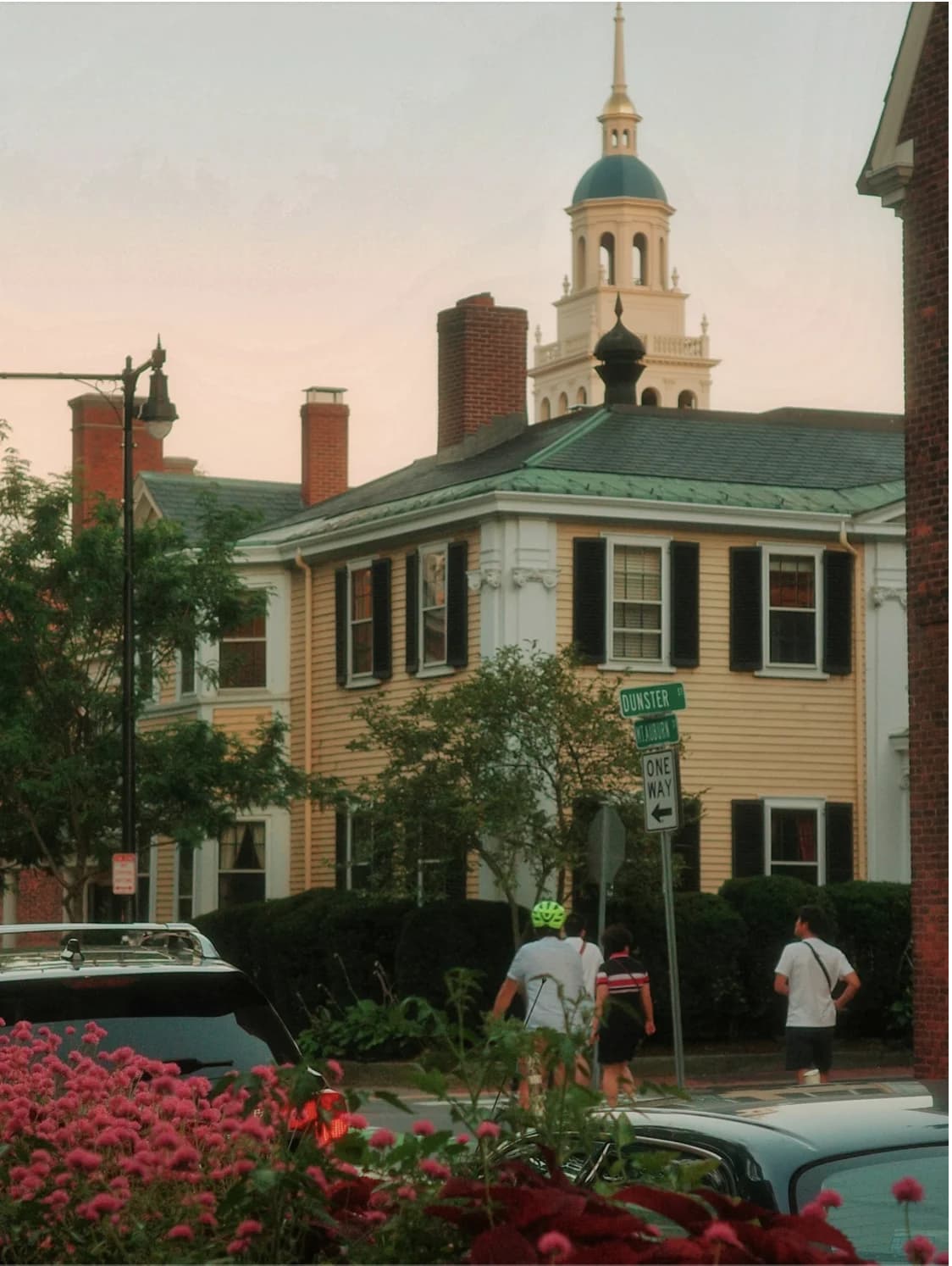
When I'm helping families make the move from the urban density of Cambridge or Somerville to something a little more grounded, Newton is usually top of mind for them. And it makes sense. Once you have young children, your priorities shift fast. Suddenly you're thinking about sidewalk safety, how far you are from a pediatrician, and whether the morning school run is going to be a logistical nightmare. Newton's 13 distinct villages meet all those needs while maintaining a vibrant and engaging community. Envision the calm, tree-lined stability of a classic New England suburb - without cutting you off from everything that makes Greater Boston so livable.
When discussion about Newton "enters the room," typically Lexington does, too. The areas genuinely compete for the same buyer. I welcome you to read through both Neighborhood pages and let me know what you still want to learn about them. Each has a few distinct advantages that usually move the needle for a young family or family-to-be.
Read on to learn what families need to know before making the move to Newton.
$1,487,500Median sale price
Newton Relocation Snapshot for Young Families
A high-level family relocation snapshot combining core market, commute, safety, and school headline numbers. A market snapshot is used because the metrics mix currencies, percentages, counts, time, and distance.
Months of supply3.8 months
Median days on market28
Sale-to-list ratio98.57%
Homeownership rate71 percent
Population89,000
Distance to Downtown Bostonseven miles
Violent crime rate0.5
Schools
Average school ratingTotal Newton Public Schools Enrollment
How is the commute from Newton, MA to downtown Boston?
Short answer: Essentially a breeze. The commute from Newton to downtown Boston runs 15 to 25 minutes by car via I-90, or around 20 minutes on the Commuter Rail. For working parents juggling office schedules and daycare pickups, that kind of predictability is highly valuable.
Newton sits just seven miles from downtown Boston, which puts it in a sweet spot most suburbs can't match. Drivers have the Mass Pike running directly through the northern part of the city - efficient, direct, and well-connected. If you'd rather skip the car entirely, the MBTA Green Line D Branch runs straight through Newton, with daily parking available at the Riverside and Woodland stations. Prefer the Commuter Rail? The Newtonville station gets you to South Station in about 20 minutes. Bada bing, bada boom.
Beyond the commute itself, there's another regular question asked by parents when we're touring homes here; how safe is Newton?
My Answer: So safe that it's soothing. Newton is a beacon of safety, likened to suburban realities of decades past. The town's violent crime rate is just 0.5 per 1,000 residents, which is but a fraction of the Massachusetts average of 3.15, and well below the national median of 4. Property crime sits at 6.00 per 1,000 residents. These aren't just reassuring numbers on paper. They translate directly into confidence that your kids can play outside without a second thought.
Are the public schools in Newton, MA good for young families?
They're exceptional. The two public high schools consistently rank in the top 5% of schools nationwide, and in 2026 the district earned a ranking of #10 in the state. Newton Public Schools carry an average rating of 8 out of 10, and most homes in the city's historic neighborhoods sit within a 0.5 to 1-mile radius of a top-rated elementary school. For many families, the schools alone close the deal.
The district gives parents real options. There are 21 public schools and 18 private schools within the city, serving a wide range of learning styles and family priorities.
Schools in Newton, MA
A quick school-system card for relocating families highlighting school counts, public/private options, and overall rating context.
Total public school enrollment sits at 11,603 students - large enough to offer strong programming, but organized in a way that still feels neighborhood-scaled. Elementary schools like Mason-Rice and Bowen are genuine walking-distance schools, connected by safe, foliage-lined sidewalks that make the morning routine something to look forward to rather than dread. As kids get older, the transition stays smooth: Newton North High School (2,080 students) and Newton South High School (1,865 students) are both centrally located and typically just a 5 to 10-minute drive from anywhere in the city's thirteen villages.
The community's investment in education goes beyond reputation, too.
$314.5 millionApproved budget
Newton Public Schools FY27 Budget
Education infrastructure matters for young families. This project card summarizes the approved FY27 school budget and the headline program choice to fund math intervention support while making reductions elsewhere.
Fiscal yearFY27
Vote to approve budget9-0
Middle school math interventionists fundedfunds eight middle school math interventionists
The recently approved FY27 budget of $314.5 million passed unanimously, with dedicated funding for eight middle school math interventionists as part of the district's Math Pathways program. That kind of unanimous, forward-looking commitment to education doesn't just benefit students - it anchors property values in a way that holds up over time.
What is day-to-day life like for families living in Newton, MA?
Genuinely comfortable. Groceries, gas, pharmacies, and world-class healthcare are all within a 5 to 10-minute drive from most homes. The city's village structure means you get quiet residential streets right alongside the practical conveniences that make family life run smoothly.
For grocery runs, Whole Foods Market in Newtonville and Wegmans at Chestnut Hill cover everything from weeknight dinners to birthday cake. Village centers like Newton Centre and West Newton have pharmacies, local shops, and coffee stops all within easy reach.
For families with young kids, one detail stands out above the rest: Newton-Wellesley Hospital is located right inside the city. Late-night fevers, playground injuries, unexpected ER visits — you're within 10 minutes of emergency and pediatric care from virtually anywhere in town. That kind of proximity is easy to overlook until you actually need it.
Family Lifestyle Scores in Newton
A family-focused lifestyle radar showing how Newton scores across everyday quality-of-life factors on a common 100-point scale. Parks and healthcare stand out most, while grocery, shopping, nightlife, and daycare access score lower in this source.
Parks84/100
Grocery15/100
Dining37/100
Nightlife0/100
Shopping0/100
Healthcare54/100
Daycare0/100
Walk Score29/100
A family-focused lifestyle radar showing how Newton scores across everyday quality-of-life factors on a common 100-point scale. Parks and healthcare stand out most, while grocery, shopping, nightlife, and daycare access score lower in this source.
Once the week settles down, Newton's outdoor life is where the city really earns its reputation. It scores an 84 out of 100 for parks, and families take full advantage — swimming at Crystal Lake Park , hiking through the 118-acre Webster Conservation Area, or simply letting kids run in the kind of open space that's hard to find closer to the city. Cambridge has energy and culture in abundance. Newton gives families something different: room to breathe, safety to trust, accessibility, and a community built around the long game.
Local Spots & Favorites
Newton Market Statistics
Median sale price, days on market, and closed sales by property type.
Yes. Newton, MA offers a family-focused mix of low crime, highly rated schools, walkable village centers, and convenient access to daily essentials.
Violent crime is 0.5 per 1,000 residents and property crime is 6.00 per 1,000 residents. Families also benefit from parks, tree-lined sidewalks, and healthcare access within about 10 minutes from most homes.
How is the commute from Newton, MA to downtown Boston?
Newton, MA is about seven miles from downtown Boston, and the commute typically takes 15 to 25 minutes by car via I-90. Commuter Rail service from Newtonville reaches South Station in about 20 minutes.
The MBTA Green Line D Branch also runs through the city, with daily parking available at Riverside and Woodland. This makes Newton a practical option for parents balancing office commutes and school or daycare schedules.
Are the public schools in Newton, MA good?
Yes. Newton Public Schools are highly rated, with an average rating of 8 out of 10.
The city has 21 public schools and 18 private schools, with 11,603 students enrolled in the public system. Many historic homes are located within 0.5 to 1 mile of top-tier elementary schools, and both Newton North and Newton South high schools are typically a 5 to 10-minute drive from most of the city’s thirteen villages.
What is everyday family life like in Newton, MA?
Daily life in Newton, MA is built around convenience. Grocery stores, gas stations, pharmacies, shops, and healthcare are generally within a 5 to 10-minute drive from most homes.
Newton-Wellesley Hospital is located within the city, giving families access to emergency and pediatric care within about 10 minutes from almost anywhere in town. For recreation, Newton scores 84 out of 100 for parks, with destinations like Crystal Lake Park and the 118-acre Webster Conservation Area.
Does Newton, MA have good public transportation for families?
Yes. Newton, MA has multiple transit options that support family logistics and commuting.
The MBTA Green Line D Branch runs through the city, and the Commuter Rail serves Newtonville with about a 20-minute trip to South Station. For drivers, I-90 runs through the northern part of the city and supports a typical downtown Boston commute of 15 to 25 minutes.
Are homes in Newton, MA close to schools and services?
In many parts of Newton, MA, homes are close to both schools and everyday amenities. Most historic homes are within 0.5 to 1 mile of top-tier elementary schools.
From most homes, grocery stores, gas stations, pharmacies, and healthcare are within a 5 to 10-minute drive. Newton North and Newton South high schools are also centrally located, usually 5 to 10 minutes away from most villages.
How strong is Newton, MA’s commitment to schools?
Newton, MA shows a strong financial commitment to public education. The FY27 school budget is $314.5 million and passed unanimously.
That budget specifically funds eight middle school math interventionists for the district’s Math Pathways program. This level of investment supports the school system as a key part of family decision-making in Newton.